State of the School District: Scarsdale, NY
High performance, high expectations, and a community negotiating the next operating model
Summary Perspective
Scarsdale Union Free School District enters 2026 from a position of unusual strength. By conventional measures, college enrollment, SAT/ACT performance, AP results, Regents pass rates, and state assessment outcomes, the district performs at levels that place it among New York’s strongest public school systems. NYSED lists Scarsdale UFSD as serving 4,691 K-12 students in 2024-25 and classifies the district under Local Support and Improvement, not a higher-intervention accountability category.1
But the more important story is not simply that Scarsdale performs well. The 2026 story is that Scarsdale is attempting to preserve elite academic outcomes while evolving its model of schooling: more student choice, more inquiry, more performance-based assessment, more interdisciplinary work, more real-world application, and a broader definition of success than test performance alone.
In Scarsdale’s own language, this is often described through Learning, Living, and Leading. In practical terms, that means a district trying to combine academic rigor with student well-being, belonging, civic purpose, and what the district calls agency, students developing the confidence, judgment, and capacity to make choices, pursue meaningful questions, and have an impact beyond compliance-based schoolwork. Scarsdale’s strategic plan describes “Leading” as fostering interdependence while nurturing students’ “self-efficacy and agency to make an impact.”2
This report’s central finding is that Scarsdale is not a turnaround story. It is a sustainability story. The district’s challenge is not whether it can produce high achievement. It already does. The challenge is whether it can sustain breadth, excellence, innovation, community trust, and student well-being under rising fiscal pressure, facilities needs, curriculum debates, assessment reform, and recent community-climate tensions.
At a glance: the 2026 Scarsdale profile Dimension Current-state signal District status NYSED lists Scarsdale UFSD as a Local Support and Improvement district, the state’s broad category for districts not identified for higher levels of intervention.1 Enrollment NYSED’s 2024-25 profile lists 4,691 K-12 students.1 Demographics NYSED enrollment comparison data for 2024-25 show Scarsdale students as approximately 55% White, 27% Asian/NHOPI, 9% Hispanic/Latino, 1% Black, and 9% multiracial; the same source lists 15% students with disabilities and 2% English language learners.3 Economically disadvantaged subgroup NYSED’s enrollment comparison lists 0 economically disadvantaged students in 2024-25 and 1 in 2023-24, which has major implications for subgroup analysis.3 College-going Scarsdale reported that 98% of the Class of 2025 enrolled in college and 97% enrolled in four-year colleges.4 SAT Class of 2025 mean SAT: 683 ERW, 702 Math, 1385 Total.4 ACT Scarsdale reported 88% of ACT test-takers meeting all four college-readiness benchmarks, versus 59% statewide.4 AP In 2025, 551 students took 1,145 AP exams; mean score was 4.2, and 95% of exams scored 3 or higher.4 Regents In 2025, Scarsdale reported 99% scoring 65-100 on Algebra, ELA, Living Environment, Global History, and U.S. History Regents exams.4 Operating budget Voters approved the $197.1 million 2026-27 budget by 2,193 yes to 647 no, or 77.2% approval.5 Capital bond Voters approved a $101.7 million capital bond by 2,030 yes to 805 no, or 71.6% approval.5 Athletics The district offers a broad athletics portfolio, including mainstream sports and less common offerings such as fencing, crew, skiing, ultimate frisbee, flag football, and gymnastics.6 Recent community climate issue In 2026, the district addressed an antisemitic incident involving Israeli Culture Club flyers, prompting board discussion of student speech and dress guidelines.7
1. The headline: Scarsdale’s performance remains exceptional, but the strategic question has changed
The core academic profile is clear. Scarsdale is a high-performing district by almost any public measure.
At the high school level, the district reported a 98% college enrollment rate for the Class of 2025, including 97% enrolling in four-year colleges.4 The same cohort produced a mean SAT total score of 1385, with a mean math score of 702 and ERW score of 683.4 On ACT benchmarks, Scarsdale reported 88% of students meeting all four college-readiness benchmarks, compared with 59% statewide.4
The AP trend is especially notable. From 2020 to 2025, Scarsdale’s AP exam volume increased from 542 exams to 1,145 exams, while the reported mean score remained 4.2 in 2025 and 95% of exams scored 3 or higher.4 In many systems, expanding access can lead to lower mean scores as more students participate. Scarsdale’s public data show a different pattern: participation expanded substantially while outcomes remained very high.
K-8 performance is also strong. Scarsdale’s 2025 assessment presentation reported 93% proficiency across grades 3-8 ELA, with grade-level ELA rates between 91% and 95%.4 Science appears to be a quiet strength: Grade 5 science proficiency ranged from 87% to 97% across elementary schools, and Grade 8 science reached 94% proficiency, with 44% at Level 4.4
The strategic question, therefore, is not whether Scarsdale can perform. It is whether Scarsdale can maintain this level of performance while changing the learning model, managing student stress, navigating fiscal constraints, responding to community concerns, and preserving broad opportunities.
2. The equity lens: why the requested like-for-like comparison is analytically constrained
A key requirement for this report was to avoid top-line school averages and instead compare like-for-like groups: economically disadvantaged students with economically disadvantaged students across schools, and non-economically disadvantaged students with non-economically disadvantaged students across schools.
That is the correct methodology. It avoids confusing school effectiveness with student composition.
However, Scarsdale presents a structural data issue: NYSED’s enrollment comparison data list 0 economically disadvantaged students in Scarsdale UFSD in 2024-25 and 1 in 2023-24.3 That means an economically disadvantaged proficiency comparison across Scarsdale schools is not meaningful in the usual way. There is effectively no reportable ED subgroup at the district level, and school-level subgroup counts would likely be absent, suppressed, or statistically unusable.
NYSED’s report-card database is still the correct source for subgroup proficiency data. It includes school and district assessment results and is the official mechanism for public comparison.8 NYSED also notes that report-card data come from local district submissions that are verified and corrected by school superintendents or charter school leaders.9 But in Scarsdale’s case, the ED subgroup lens is limited not because the question is wrong, but because the underlying population is too small to support the analysis.
The practical conclusion is this:
This report does not rank Scarsdale schools by top-line proficiency. Overall proficiency is used only as district context. For school-level comparisons, the most responsible next step would be a NYSED report-card extract focused on non-economically disadvantaged students by school, grade, subject, tested count, and proficiency rate. ED comparisons should be treated as non-reportable unless NYSED produces valid, non-suppressed cells.
This is itself an important finding. In many districts, economically disadvantaged subgroup performance is central to understanding inequity. In Scarsdale, the more relevant equity questions may involve access to advanced coursework, special education supports, belonging, student stress, language access, race/ethnicity where reportable, and participation in high-value experiences, not ED proficiency gaps.
3. What “student agency” means in Scarsdale
Because Scarsdale uses language such as “agency,” “inquiry,” “performance-based assessment,” and “authentic learning,” it is important to define these terms in context.
In Scarsdale, student agency does not appear to mean unstructured student choice or reduced academic expectations. It means students are given structured opportunities to make decisions, pursue questions, demonstrate learning in varied ways, apply knowledge outside traditional tests, and see themselves as capable actors in a larger community.
Several parts of the district’s model reinforce that interpretation.
First, Scarsdale’s strategic plan explicitly links leadership to student self-efficacy and agency.2 The district’s “Leading” language emphasizes interdependence, inquiry, continuous improvement, innovation, sustainability, and students’ capacity to make an impact.
Second, the Tri-State Consortium review of Scarsdale’s assessment work identified student-centered learning as a district strength, citing student choice in topics and modes of demonstrating learning, students presenting work to peers, and active learning experiences in elementary classrooms.4
Third, the district’s high school programs operationalize agency through concrete structures: Advanced Topics courses, Senior Options, the STEAM Design Lab, the Scarsdale Alternative School, global education, and social entrepreneurship grants. These are not just slogans. They are programmatic choices.
That matters because Scarsdale’s 2026 identity is increasingly defined by a dual ambition: elite academic outcomes plus a more modern, student-centered learning architecture.
4. Advanced learning: Scarsdale’s opportunity system is unusually broad
Scarsdale’s advanced-learning model is broader than AP participation. AP results are strong, but the district’s distinctive programs suggest a larger design: give students rigorous academic opportunities, but also give them more voice, interdisciplinary work, authentic audiences, and real-world application.
Advanced Topics
Scarsdale’s Advanced Topics program is a district-specific advanced-course model.10 The district describes these courses as college-level experiences built around powerful ideas, challenging content, independent work, deep exploration, close reading, writing, complex thinking, and resilience.10
Advanced Topics courses are not simply AP classes under another name.10 The district states that these courses use authentic sources, interdisciplinary connections, analysis, synthesis, evaluation, original thinking, and independent research. Where Advanced Topics courses align with AP exams, they may prepare students for those exams, but the district says the courses balance content coverage with student-centered discussion, in-depth study, analytical work, and independent research.
This helps explain why Scarsdale’s high school profile looks different from districts that define rigor mainly by AP volume. Scarsdale has high AP performance, but its advanced-learning philosophy extends beyond AP.
STEAM Design Lab
The STEAM Design Lab is Scarsdale High School’s design, engineering, entrepreneurship, and technology pathway.11 The district describes it as hands-on and human-centered, with students solving real-world problems ranging from constrained design challenges to community problems identified through interviews and observations.
The pathway includes electives such as Introduction to Engineering, Human Centered Design, Robotics, Principles of Electrical Engineering, Design/Build, Design for Modern Production, Mobile App Design and Development, and Advanced Topics Entrepreneurship.11 The district describes the pathway as three levels, with certain courses requiring prerequisites and the AT Entrepreneurship course requiring an application, essay, and interview.
This is one of the clearest examples of Scarsdale’s student-agency model: students are not only learning content; they are learning to identify problems, design solutions, and work with constraints.
Senior Options
Senior Options is a graduation requirement for all Scarsdale seniors.12 It begins in early May and runs through the end of the school year. Students pursue unpaid community service, internships, independent projects, or workplace-based experiences, with faculty mentoring and committee approval.12
The program matters because it makes real-world application universal rather than optional. In many districts, internships and independent projects are enrichment opportunities for a subset of students. In Scarsdale, Senior Options is positioned as a culminating experience for every graduate.
Scarsdale Alternative School
The Scarsdale Alternative School is an experimental school-within-a-school at Scarsdale High School.13 Created in 1972 by students, teachers, and administrators, it serves mainstream sophomores, juniors, and seniors who want more voice in their education.13 The district states that it is not an at-risk program; students enter through a lottery after an information process.
This is important context. “Alternative school” can mean many things nationally, often including remedial or disciplinary programs. In Scarsdale, it is better understood as a long-standing student-voice and experimental-learning option within a high-performing high school.
Global education
Scarsdale’s global education program emphasizes respect for other cultures, global citizenship, inquiry, real-world application of curricular knowledge, relationships with people in other countries, independence, and adaptability.14
This fits the district’s broader strategic direction: learning is framed not only as academic mastery, but as preparation for participation in an interdependent world.
Social entrepreneurship
The Scarsdale Fellowship for Social Entrepreneurs provides grant support for students working on environmental or societal problems.15 The district describes it as a way for students to see themselves as agents of positive change and to seed or scale social entrepreneurship ideas. The fellowship is open to all high school students, not only those enrolled in AT Entrepreneurship.15
This is another concrete expression of student agency: students are invited to identify a problem, propose a solution, pitch the idea, receive feedback, and potentially obtain funding.
5. Assessment reform: promising direction, real implementation risk
Scarsdale’s assessment work is central to understanding the district’s current direction.
A performance-based assessment is an assessment in which students demonstrate learning through a product, presentation, investigation, design, performance, written analysis, or other authentic task rather than only through a traditional test. In a high-performing district such as Scarsdale, the purpose is not to lower standards; it is to measure deeper learning, transfer, communication, problem-solving, and application.
The Tri-State Consortium review is especially useful because it provides an outside lens. The review process included assessment review, classroom observations, and interviews with students, teachers, administrators, families, and Board of Education members.4 The review praised Scarsdale’s shared purpose, commitment to growth, teacher engagement, and development of student-centered learning.4 It also noted course offerings and student experiences involving risk-taking, resilience, higher-level thinking, inquiry, and student choice.
But the review did not simply validate the district. It also identified important improvement areas. It recommended that Scarsdale build common definitions for performance assessments and performance tasks, prioritize meaningful assessment development, review grading and assessment practices for alignment with the strategic plan, reduce student pressure related to grades and assessments, and communicate the “why” of assessment changes more clearly to families.4
That combination is revealing. Scarsdale appears to have the ingredients for a sophisticated assessment model, strong teachers, engaged students, community interest, and a strategic plan that supports deeper learning. But the system still needs coherence. In a district with high parental expectations and intense college orientation, assessment reform can become a source of mistrust if families do not understand how new practices preserve rigor, fairness, and college readiness.
The district’s own academic outcomes give it permission to innovate. The community’s expectations make that innovation hard.
6. Academic outcomes: the evidence base
College readiness
Scarsdale’s college-readiness indicators remain exceptionally strong.
The Class of 2025 college-going profile shows 98% of graduates enrolling in college and 97% enrolling in four-year institutions.4 The district also reported that 69% of the Class of 2025 was accepted to a U.S. News top-50 university or top-50 liberal arts college.4 That selectivity metric should be interpreted carefully because it depends on the district’s chosen ranking methodology, but it reinforces the broader picture of a highly college-oriented system.
Standardized college-readiness data tell a similar story. Scarsdale’s Class of 2025 mean SAT total was 1385, compared with a national benchmark shown in the district report of 1010.4 On ACT, Scarsdale reported 88% meeting all four readiness benchmarks, compared with 59% statewide.
The peer comparison is also strong. In Scarsdale’s comparable-district SAT/ACT chart, Scarsdale’s SAT total was shown above Chappaqua, Bronxville, Great Neck South, Byram Hills, and Edgemont, while its ACT composite was near the top of the group.4
AP and Regents
The AP story is one of the district’s strongest positive surprises. In 2025, Scarsdale reported 551 AP test-takers, 1,145 exams, a 4.2 mean score, and 95% of exams scoring 3 or higher.4 The number of AP exams more than doubled compared with 2020, yet the average score remained high. That suggests Scarsdale expanded advanced testing participation without a visible decline in aggregate performance.
Regents results also remain extremely high. In 2025, Scarsdale reported 99% of students scoring 65-100 in Algebra, ELA, Living Environment, Global History, and U.S. History.4 NYSED has cautioned that new Regents exams introduced in June 2025 should be interpreted carefully because score dips can occur when assessments change.16 Even with that caveat, Scarsdale’s reported Regents performance is very strong.
Grades 3-8 ELA, math, and science
Scarsdale’s 2025 grades 3-8 ELA outcomes were high across grade levels, with the district reporting 93% proficiency overall and grade-level proficiency between 91% and 95%.4 The district’s math comparison chart likewise positioned Scarsdale strongly against regional and comparable-district benchmarks.
Science deserves special attention. Grade 5 science proficiency by elementary school ranged from 87% at Quaker Ridge to 97% at Edgewood, with the district overall at 91%.4 Grade 8 science was stronger still, with 94% proficiency and 44% of students at Level 4.4
The school-level Grade 5 science results should not be overinterpreted. They are not adjusted for subgroup composition, cohort size, or individual student needs. But they do show that science is a meaningful part of the district’s performance story, not merely an afterthought behind ELA, math, and college admissions.
7. Athletics and student life: breadth is part of the Scarsdale value proposition
Scarsdale’s athletics program is broad for a public district.6 The official athletics site lists traditional offerings such as baseball, basketball, football, soccer, lacrosse, tennis, volleyball, swimming, track and field, wrestling, golf, field hockey, softball, and ice hockey. It also lists less common or specialized offerings, including crew, fencing, skiing, ultimate frisbee, bowling, cheerleading, dance, gymnastics, and girls flag football.6
This breadth matters because it reflects a wider district value proposition: students are offered many ways to attach to school, build identity, compete, collaborate, and lead. In a district where academic pressure is a recurring theme, the extracurricular portfolio is not peripheral; it is part of the student-experience architecture.
The district also has recent athletic success beyond participation. Scarsdale’s girls flag football team completed an undefeated 22-0 season and won the 2025 Class A state championship, defeating Half Hollow Hills 22-6.17 The local report noted that the program was only three years old.
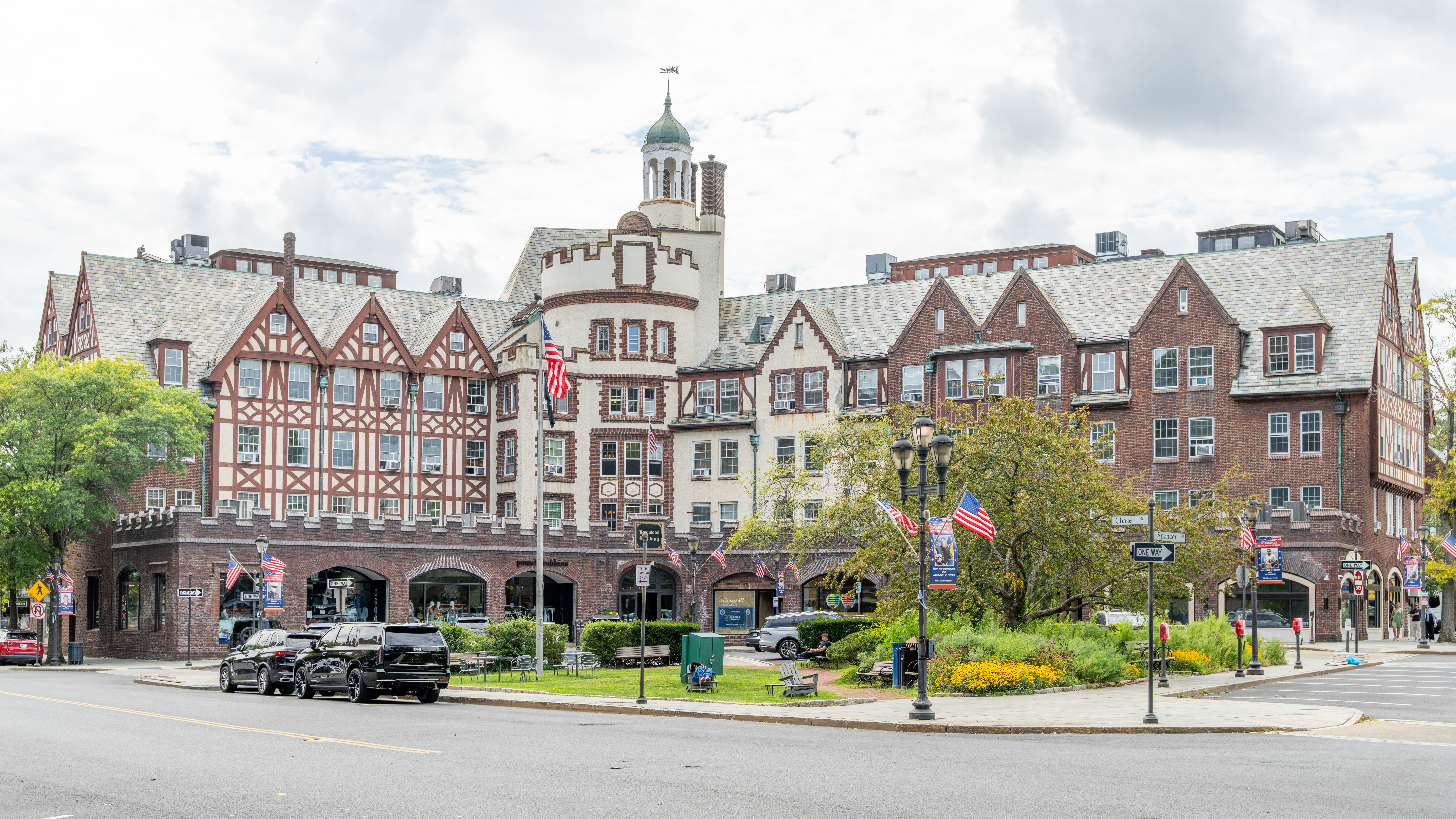
The athletics picture connects directly to facilities and finance. The 2026 capital bond includes work across the district and specifically identifies a Scarsdale Middle School turf field project within the final bond scope.18 Voter support for the bond suggests the community continues to see facilities, including athletic and outdoor space, as part of the district’s long-term educational infrastructure.
8. Finance, facilities, and governance: strong support, rising constraints
Scarsdale’s community continues to fund its schools at a high level. In May 2026, voters approved the $197.1 million 2026-27 school budget with 77.2% support and approved the $101.7 million capital bond with 71.6% support.5
The approval margins were strong, but the underlying budget story is more constrained than the headline suggests. The proposed 2026-27 budget increased by 2.92% and stayed within the tax cap, but local reporting described nearly $2 million in reductions needed to make the budget work.19 Cost pressures included projected increases of $2.8 million in health insurance, $3 million in salaries and wages, $400,000 in Social Security and Medicare, and $1.1 million in contractual obligations including student services and insurance.19
The budget materials frame the district’s core operating model around small elementary class sizes, the middle school house/team structure, a broad high school program of study, well-being and belonging, social-emotional learning, elementary math, global opportunities, and student supports.20 That is a high-cost, high-service model. Its sustainability depends on continued voter support and disciplined prioritization.
The capital bond is also significant. The district describes a multi-year planning process involving BBS Architects, Arris, a Capital Project Steering Committee formed in March 2025, and a final scope agreed upon in February 2026.18 The final bond scope totals $101,707,876.18
The fact that both budget and bond passed comfortably is a positive sign. But the bond’s lower approval rate than the operating budget is also meaningful. It suggests that while the community remains broadly supportive, major capital spending is not frictionless. Local coverage described unusually active campaigning around the 2026 vote, including mailers, emails, school tours, work sessions, farmer’s market outreach, and heightened turnout.21
The emerging governance theme is straightforward: Scarsdale retains a high-trust funding base, but public scrutiny is increasing.
9. Community climate and current debates
Antisemitism, student speech, and belonging
The most serious recent climate issue surfaced in 2026, when the school board addressed an antisemitic incident involving flyers for a student-led Israeli Culture Club event that were torn down and thrown away, with some reportedly found in a urinal. News 12 reported that students said the incident left them hurt and wanting change, and that the board discussed draft guidelines on student speech and dress.7
ABC7 reported that Superintendent Drew Patrick described the conduct as “unacceptable antisemitic conduct,” that the district investigated and took disciplinary action, and that a petition signed by more than 700 parents called for the resignation of a connected board member.22 The Jewish Telegraphic Agency also covered the incident, noting broader concern in the community and discussion of written student speech and dress guidelines.23
This issue should be viewed as more than an isolated disciplinary event. For a district whose strategic plan emphasizes belonging, democratic participation, and living well in an interdependent world, the incident tests whether those values are operational, not just aspirational.
Math curriculum and grading practices
Scarsdale has also seen public debate over math curriculum and grading practices. Local reporting in 2025 described community discussion around Reveal Math and the rolling gradebook, with parents raising concerns and administrators devoting board-meeting time to those topics.24
The rolling gradebook debate is connected to the district’s broader assessment reform. A rolling gradebook generally emphasizes cumulative performance over time rather than discrete quarterly grades. Local reporting and district updates indicate that Scarsdale piloted or continued rolling gradebook practices across multiple years and moved to an online gradebook implementation in fall 2025.25
This debate should not be reduced to “parents resisting change.” In a high-performing district, grading policies affect student stress, college expectations, perceptions of fairness, and family trust. The Tri-State review’s recommendation to review grading and assessment practices, reduce pressure related to grades, and better communicate the “why” behind changes aligns directly with these community concerns.
Budget and program breadth
Budget pressure is another live issue. The 2026-27 budget preserved a broad program but required reductions and staffing adjustments. In a district with small classes, extensive high school offerings, broad athletics, global programs, student supports, and capital needs, the strategic risk is not a single cut. It is cumulative erosion: a position here, a support there, a specialized program deferred, a class size rising gradually.
For Scarsdale, breadth is part of the brand. But breadth is also expensive.
10. What is genuinely distinctive about Scarsdale
Several districts in Westchester and the New York suburbs have high test scores and strong college placement. Scarsdale’s distinctiveness appears to come from the combination of five elements.
First: high outcomes at multiple levels
Scarsdale’s results are not confined to one metric. The district shows strength in college-going, SAT, ACT, AP, Regents, ELA, math, and science.
Second: a broad opportunity portfolio
The district offers advanced courses, design and engineering pathways, social entrepreneurship, global education, Senior Options, the Alternative School, and a wide athletics portfolio.
Third: an explicit move toward deeper learning
The Tri-State review indicates that Scarsdale is not merely talking about inquiry, choice, and performance-based assessment; it has made them part of external review and district improvement work.4
Fourth: a community still willing to invest
The 2026 budget and bond results show that voters remain willing to fund the system, even amid controversy and debate.
Fifth: high expectations that create both excellence and pressure
Scarsdale’s strengths generate their own risks. When academic outcomes are already very high, any curricular or grading change can feel risky. When college-going expectations are intense, well-being reforms can be viewed skeptically. When the district offers many programs, budget prioritization becomes politically sensitive.
Scarsdale’s core tension is not excellence versus mediocrity. It is excellence versus sustainability.
11. Surprising positive insights
AP expansion without visible performance dilution
The most striking positive finding is the AP trend. Scarsdale more than doubled AP exam volume from 2020 to 2025, while maintaining a 4.2 mean score and 95% of exams at 3 or higher in 2025.4 That suggests the district has expanded advanced academic participation without a clear drop in aggregate performance.
Science is a quiet strength
Grade 5 science performance ranged from 87% to 97% across elementary schools, and Grade 8 science reached 94% proficiency with a large Level 4 share.4 Science is often less visible in public school-performance narratives, but Scarsdale’s data suggest it deserves more attention.
Student agency is more operational than rhetorical
Scarsdale’s agency language shows up in actual structures: Senior Options, Advanced Topics, STEAM, the Alternative School, global education, and social entrepreneurship grants.101112131415
The Alternative School is not remedial
For readers outside Scarsdale, this is easy to misunderstand. The Scarsdale Alternative School is a long-standing experimental program for mainstream students seeking more voice in their education, not an at-risk placement.13
Athletics breadth includes emerging sports
The girls flag football state championship is notable not only because the team went 22-0, but because the program was reported to be only three years old.17 That suggests Scarsdale’s athletics system can absorb newer participation pathways, not just sustain legacy sports.
Voter support remained strong despite a more contested environment
The 2026 vote occurred amid a contested board election, a major bond proposal, curriculum concerns, and recent community-climate controversy. Yet the operating budget and bond both passed by wide margins.5
12. Risks and watch items for 2026-27
1. Assessment reform could outpace family understanding
The Tri-State review supports Scarsdale’s direction but also flags the need for shared definitions, coherent implementation, and better communication.4 If families do not understand how performance-based assessment preserves rigor and fairness, reform could become a trust issue.
2. Student stress remains a strategic risk
The district’s own external review recommended reducing pressure related to grades and assessments.4 In Scarsdale, this is not a soft issue. It is central to whether the district’s high-performance model is sustainable.
3. Math curriculum implementation needs continued attention
Community concerns around Reveal Math and grading practices indicate that implementation, not just curriculum selection, matters.24 The district will need clear evidence, communication, teacher support, and responsiveness to family concerns.
4. Fiscal pressure could gradually narrow the opportunity portfolio
Scarsdale’s broad model depends on staffing, facilities, and specialized offerings. The 2026-27 budget stayed within the tax cap but required reductions amid rising health insurance, salary, and contractual costs.19 The risk is not sudden decline; it is slow compression.
5. Community cohesion and belonging require active repair
The Israeli Culture Club flyer incident was widely reported and publicly painful.72223 A district that emphasizes civic life, belonging, and interdependence will need to show that those values hold under stress.
6. Subgroup transparency remains limited
Because NYSED reports essentially no economically disadvantaged students in Scarsdale, ED/non-ED proficiency comparisons cannot carry the analytical weight they might in other districts.3 The district and outside analysts should focus on other valid equity lenses: race/ethnicity where reportable, English learners, students with disabilities, access to advanced programs, participation in extracurriculars, student belonging, disciplinary patterns, and course-taking pathways.
13. Implications for district leadership
For Scarsdale, the next phase is less about launching new initiatives and more about managing coherence.
The district has many strong assets: exceptional academic outcomes, a broad program base, a sophisticated high school opportunity structure, external validation of deeper-learning efforts, strong voter support, and an engaged community. But these strengths can also create complexity. Families may support innovation in principle while questioning implementation in practice. Students may benefit from challenge while experiencing pressure. Voters may support schools while scrutinizing capital costs. Teachers may embrace performance assessment while needing time, definitions, and professional support.
A practical 2026-27 leadership agenda would center on five moves:
Define the model clearly. Explain what Scarsdale means by student agency, performance-based assessment, rigor, well-being, and belonging in concrete classroom terms. Protect the evidence base. Continue reporting outcomes, but distinguish carefully between overall performance, subgroup performance, participation, access, and student experience. Treat implementation as strategy. Math, grading, assessment, and well-being reforms will succeed or fail through teacher support, communication, consistency, and feedback loops. Make trade-offs explicit. The district cannot indefinitely expand programs, maintain small classes, modernize facilities, preserve every specialized offering, and minimize tax impact without prioritization. Rebuild trust where needed. The antisemitism incident and related governance tensions should be addressed not only procedurally, but culturally, through visible commitments to belonging, safety, and respectful civic life.
Final assessment
Scarsdale in 2026 is a high-performing district at a strategic inflection point.
It has the outcomes most districts aspire to: high college-going rates, very strong SAT and ACT results, exceptional AP performance, strong Regents results, high K-8 proficiency, and broad athletics and enrichment opportunities. It also has something more distinctive: a coherent attempt to move beyond a narrow achievement model toward student agency, deeper learning, performance-based assessment, real-world application, and civic purpose.
That ambition is credible because it is supported by real programs: Advanced Topics, Senior Options, STEAM, the Alternative School, global education, social entrepreneurship, and a wide extracurricular portfolio. It is also challenging because Scarsdale’s community has very high expectations, and every change is filtered through concerns about rigor, fairness, stress, college preparation, taxes, and trust.
The most accurate summary is this:
Scarsdale is not trying to become a good district. It is trying to remain an exceptional district while redefining what exceptional should mean.
About SchoolDecision.com
SchoolDecision.com helps families, educators, and communities understand schools and districts through source-backed profiles, district reports, performance data, program context, athletics and activity coverage, and clear comparisons that separate official data from interpretation. The platform combines public education data, local context, and transparent research methods to make school decisions more factual, navigable, and useful.